Business and buyer discovery
High-value offerings, profitable customer groups, geographies, objections, authority, visibility, and internal content capability.
Growthut connects technical accessibility, business intent, credible content, entity clarity, authority, and conversion so your business can become easier to discover, understand, and trust across a wider search ecosystem.
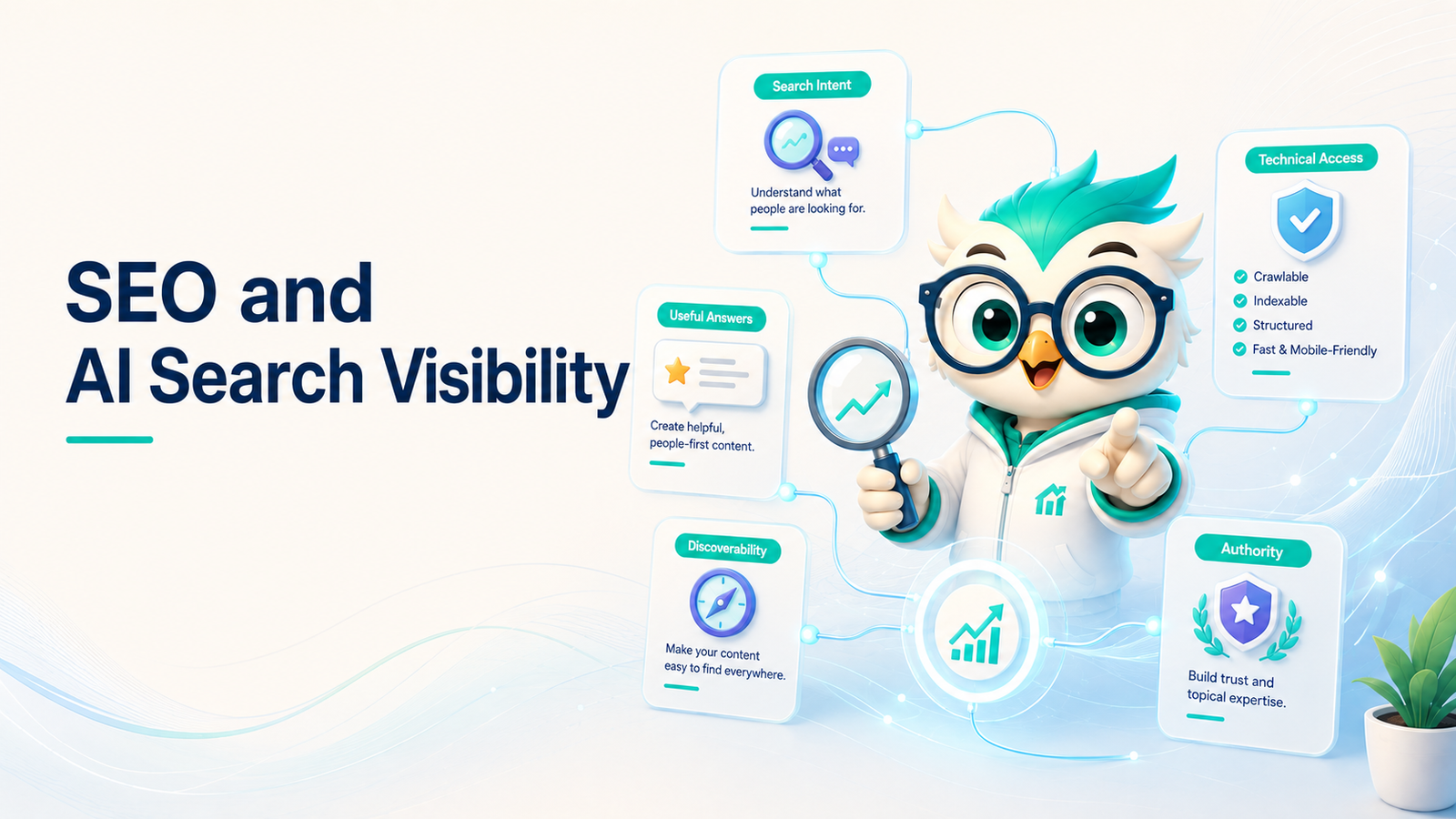
SEO is often reduced to rankings, keywords, backlinks, and articles. Businesses now need to be understood across traditional search results, local results, featured answers, AI-generated summaries, conversational assistants, social search, marketplaces, maps, videos, and industry sources.
The useful objective is to make the business discoverable, understandable, credible, and useful when a potential buyer is researching a problem.
Buyers may move between a search engine, an AI assistant, a map, a marketplace, a video, a social platform, and an industry source before they ever contact a supplier. Clear information and reliable brand signals must travel across that journey.
The exact priority depends on the website, competition, market, authority, and buying cycle.
High-value offerings, profitable customer groups, geographies, objections, authority, visibility, and internal content capability.
Crawling, indexing, templates, links, thin content, speed, mobile, canonicals, structured data, local signals, mentions, conversions, and analytics.
Problem awareness, solution research, comparison, supplier evaluation, specifications, local, branded, and post-purchase needs.
Commercial pages, categories, use cases, industries, relevant locations, guides, comparisons, FAQs, glossaries, and supporting articles.
Definitions, direct answers, logical headings, descriptive tables, summaries, visible evidence, citations, and applicable structured data.
Relevant coverage, partnerships, expert contributions, useful resources, genuine directories, associations, local references, and digital public relations.
The work begins by identifying which searches could realistically influence business outcomes and what the website must earn through technology, content, authority, and conversion.
Understand profitable offerings, buyers, markets, objections, and capacity.
Review technical access, demand, content, authority, paths, and data.
Connect search needs with buying stages and appropriate page types.
Organise commercial and supporting information around genuine relevance.
Make definitions, evidence, summaries, tables, and relationships clearer.
Pursue relevant references and resources instead of arbitrary link quotas.
Interpret visibility and enquiries through commercial relevance.
Refresh priorities as search behaviour, evidence, and the business change.
AI may assist research, organisation, comparison, and quality checks. Final content should be reviewed, refined, fact-checked, and aligned with the client's expertise and brand.
Clear definitions, credible content, consistent entities, technical accessibility, and genuine authority support traditional and AI-assisted discovery. No responsible provider can guarantee that a specific AI system will cite or recommend a brand.
May begin with a keyword list, a monthly article quota, and a fixed link target. Rankings become the report even when they have little relationship to useful demand.
Begins by identifying which searches can realistically influence business outcomes, whether the website deserves to rank for them, and what must change across technology, content, authority, and conversion.
A manufacturer asks for SEO. The provider adds keywords to existing pages, publishes four generic blogs, and builds a fixed number of links. Rankings fluctuate, reports remain lengthy, and the sales team receives few relevant enquiries.
Growthut studies the manufacturer's products, buyer locations, technical specifications, certification questions, order requirements, and sales process. It restructures commercial pages, develops buyer-focused information, improves search accessibility, and tracks enquiries according to product and market relevance.
Measurement depends on reliable analytics and the agreed scope. Reports can connect visibility with the quality and contribution of the journeys that follow.
No. Search rankings depend on competition, search systems, website condition, authority, content quality, and market behaviour. Growthut can guarantee transparent work, documented execution, and accountable improvement processes.
They represent different discovery contexts, but their foundations overlap. Clear structure, credible content, entity consistency, technical accessibility, and genuine authority support both traditional and AI-assisted discovery.
Timing depends on the website's condition, competition, market size, authority, and required changes. Some technical improvements may become visible quickly, while meaningful commercial growth usually requires sustained work.
AI may assist research, organisation, comparison, and quality checks. Final content should be reviewed, refined, fact-checked, and aligned with the client's expertise and brand.
Measurement may include qualified visibility, relevant traffic, enquiries, assisted conversions, branded search, commercial-page performance, local discovery, and technical improvements.
Is your SEO making your business easier to discover and trust, or is it only producing more keywords to report?
Share your priority offerings, markets, website condition, and current search concerns. Growthut can help define a responsible scope.