Research and perception
Stakeholder interviews, audience understanding, competitor analysis, category context, and review of existing perception.
Growthut connects positioning, message hierarchy, voice, proof, visual identity, customer experience, application templates, and governance so the brand is useful beyond a logo presentation.
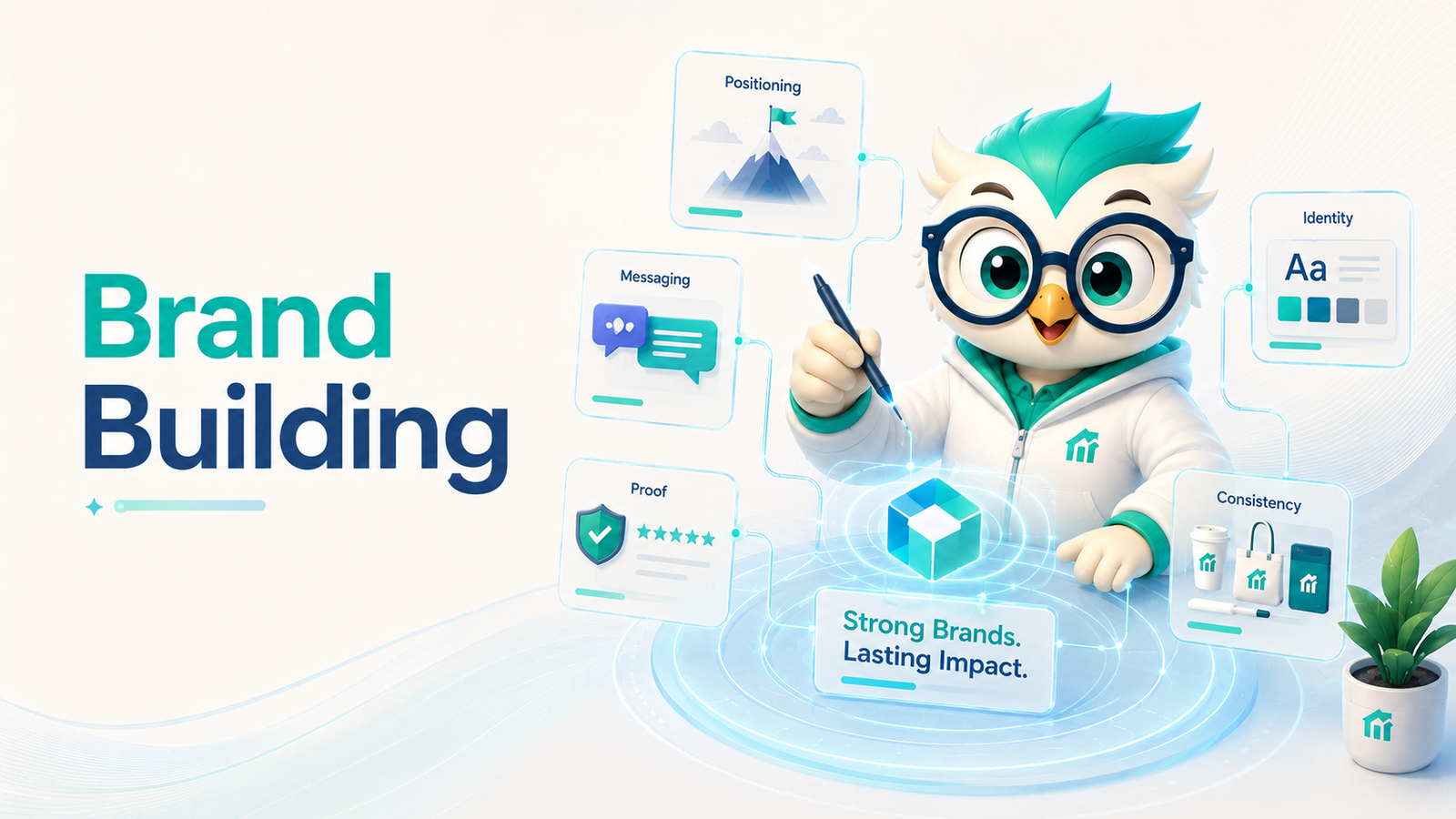
A brand is the collection of expectations, memories, meanings, experiences, and signals associated with a business.
Brand building should help people understand who the company is for, what it stands for, what it does differently, why its claims should be believed, and what experience customers can expect.
Buyers may encounter a business through search, AI-assisted discovery, a sales deck, a website, a social post, packaging, an employee, or a service experience. When every touchpoint explains the company differently, recognition and confidence become harder to build.
Stakeholder interviews, audience understanding, competitor analysis, category context, and review of existing perception.
Define who the business is for, why it is relevant, what it promises, and what evidence supports that promise.
Organise the core narrative, value, differentiators, proof, service explanations, and supporting messages.
Set voice principles, language boundaries, terminology, and practical examples for consistent communication.
Create or refresh an appropriate visual system, including the logo where scoped, rather than treating the logo as the system.
Prepare templates, usage guidance, review responsibilities, and ongoing consistency checks teams can actually apply.
Learn from business leaders and relevant stakeholders.
Study audience, competitors, category, and current perception.
Clarify relevance, audience, difference, and category context.
Connect the brand promise with believable support.
Build a hierarchy for consistent explanation.
Set verbal principles and practical boundaries.
Translate the position into adaptable visual rules.
Prepare templates, guidance, and review methods.
AI tools can produce many language and visual variations quickly. Without defined voice, message hierarchy, visual rules, proof boundaries, and review responsibility, that speed can multiply inconsistency.
Growthut should define how AI-assisted work is reviewed, fact-checked, and aligned with the brand before publication.
Creates a logo, colours, fonts, and a presentation. The result may look polished but remain disconnected from sales language, proof, customer experience, and daily application.
Connects the identity with positioning, language, proof, customer experience, and practical application so teams have a usable system.
A growing supplier receives a premium logo and brand book. Sales decks, website pages, packaging, and social media continue using unrelated language and visuals.
Growthut first clarifies the supplier's target markets, purchasing criteria, operational strengths, and desired perception. The visual and verbal systems are then created around that position and applied consistently.
Measurement depends on the project, available baseline, channels, and adoption. Growthut can review how the system is being understood and applied without claiming that every signal is caused by branding alone.
No. Established businesses may need branding when entering new markets, changing audiences, expanding services, overcoming inconsistency, or correcting an outdated perception.
It can, but the logo is only one part of positioning, voice, messaging, visual identity, proof, and application.
Yes. A refresh may preserve valuable recognition while improving clarity, consistency, and relevance.
Possible signals include stronger message consistency, improved recognition, better sales-material effectiveness, branded search, customer feedback, conversion quality, and internal adoption.
AI increases content volume and variation, which makes clear brand rules more important. Growthut should define how AI-generated work is reviewed and aligned with the brand.
Does your brand help buyers recognise why you matter, or does it only make your materials look coordinated?
Share the business context, audience, current perception, and places where inconsistency is creating difficulty. Growthut can help define the right type of brand project.